
Board of Directors
IRM Blogs
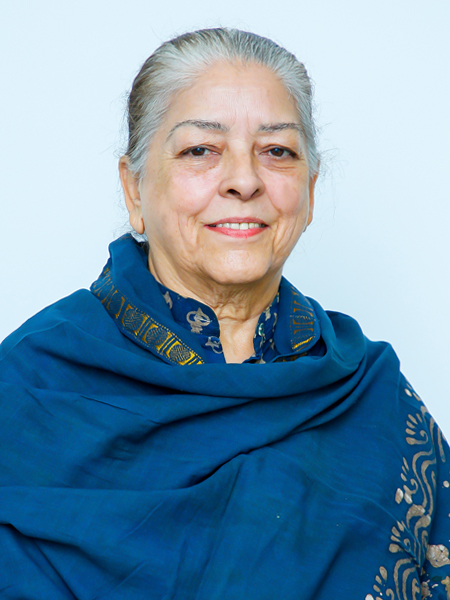
Dr. Shahida Jaffery, Chairperson
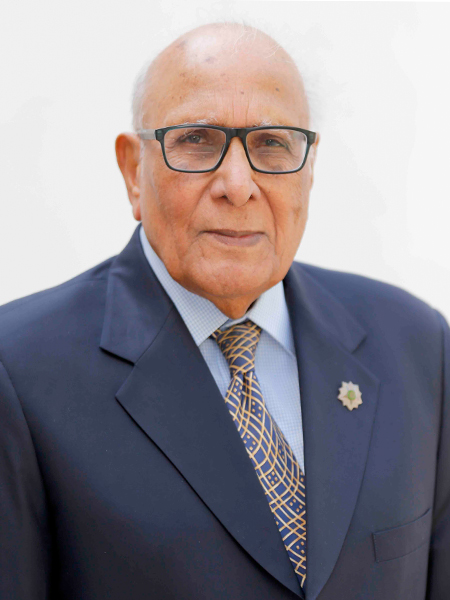
Mr. Shoaib Sultan Khan, Director
Mr. Shoaib Sultan Khan is the visionary architect of Pakistan’s rural support movement and remains our organization’s guiding inspiration. In 1982, he initiated the Aga Khan Rural Support Programme (AKRSP), fundamentally transforming how development works in Pakistan. What began as an experiment benefiting one million people in Northern Pakistan has evolved into a movement spanning Pakistan and India, now improving the lives of over 40 million rural households, nearly 200 million people.
This represents one of the most successful development models ever replicated in South Asia. After serving in Pakistan’s Civil Service (1955-1978) and with the United Nations as Social Development Consultant for UNICEF in Sri Lanka and Senior Adviser for UNDP’s South Asia Poverty Alleviation Programme, Mr. Khan has dedicated himself to building and mentoring rural support programmes across the region. His contributions have earned him the Sitara-e-Imtiaz, Magsaysay Award, World Conservation Medal, Hilal-i-Imtiaz, Nishan-e-Imtiaz, and the Aga Khan’s Lifetime Achievement Award.
He studied English Literature, Law, and Public Administration at the Universities of Lucknow, Cambridge, and Peshawar.
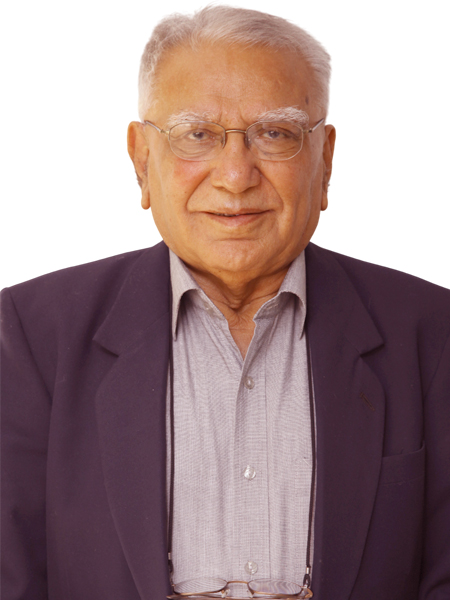
Mr. Nazar Memon, Director
Mr. Nazar Memon has spent his career bridging international development expertise with Pakistan’s grassroots realities. Beginning with UNICEF’s social planning initiatives for women and children, he expanded his reach across Africa, implementing area-based development programs in Tanzania and Uganda before serving as Head of Area Services in Kenya and South Africa. Returning to Pakistan, he led the Sindh Rural Support Organization (SRSO) as Chief Executive Officer until 2008.
His policy impact includes serving as Consultant for Capacity Building at the National Reconstruction Bureau, where he played a crucial role in drafting the Local Government Ordinance 2000 that reshaped Pakistan’s devolution process. His strength lies in translating complex development frameworks into community-level action.
Mr. Memon holds an MA in Regional Planning from Clark University, USA, with specialized diplomas in Comprehensive Regional Planning from the United Nations Center for Regional Development, Japan, and District Health Planning from the Institute of Child Health, London.
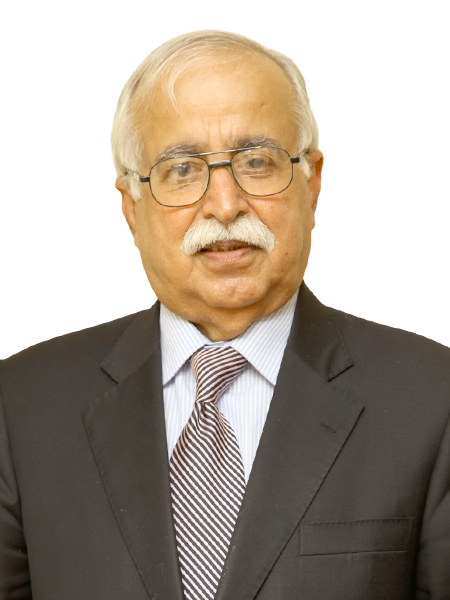
Mr. Fazalullah Qureshi, Director
Mr. Fazalullah Qureshi is a seasoned bureaucrat whose career has shaped Pakistan’s economic and regulatory landscape. He served twice as Federal Secretary of Planning & Development, held the position of Vice Chairman at the National Electric Power Regulatory Authority (NEPRA), and chaired the National Tariff Commission. This high-level policy experience now channels into Pakistan’s development sector through his board memberships with the Sindh Rural Support
Organization, Pakistan Poverty Alleviation Fund, Rural Support Programmes Network, NRSP Microfinance Bank, and National Rural Support Program. He also serves on the Sindh Graduate Association and the Trust for Voluntary Organizations. Mr. Qureshi brings a rare combination of macroeconomic policy expertise and development sector governance to the organizations he advises.
He holds an MA in Economics from Sindh University, a Certificate in Development Economics from Glasgow University, UK, and completed a Fellowship in Development Economics from the World Bank’s Economic Development Institute, Washington.
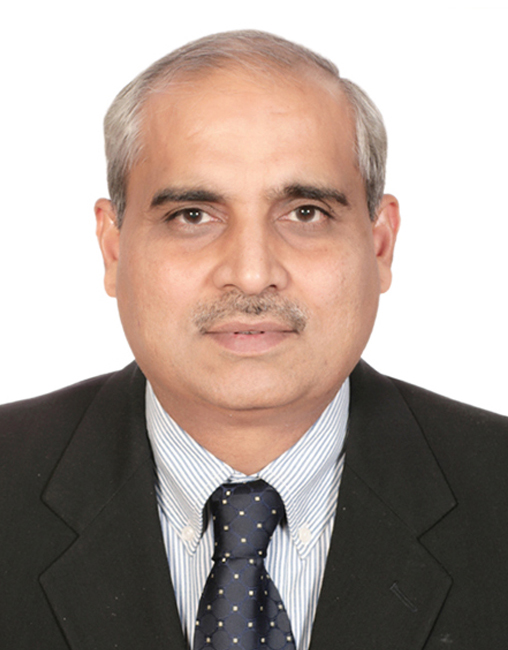
Dr. Rashid Bajwa, Director
Dr. Rashid Bajwa has spent over 30 years building the National Rural Support Programme (NRSP) into one of South Asia’s largest NGOs, an achievement that reflects both institutional vision and operational excellence. As NRSP’s chief architect and current leader, he has overseen its expansion into one of Pakistan’s most significant microfinance programmes, bringing financial services to millions who were previously excluded from the formal banking system.
His instrumental role in establishing Khushaali Bank pioneered microfinance as a sustainable development tool in Pakistan. Beyond NRSP, Dr. Bajwa shapes the broader rural development ecosystem through his board positions with Khushaal Pakistan Fund, Punjab Rural Support Programme, Sindh Rural Support Organisation, Ghazi Barotha Tarqiati Idara, and the Rural Support Programmes Network. His expertise spans management, social mobilization, community development, microfinance, and policy formulation.
Dr. Bajwa holds an MPH from the United Kingdom and an MBBS from Pakistan.
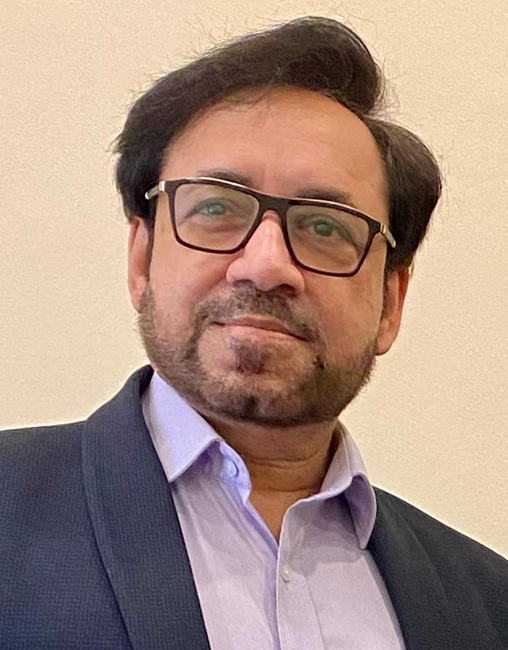
Dr. Syed Kaleem Imam, Director
Dr. Syed Kaleem Imam brings an extraordinary breadth of experience spanning national security, international peacekeeping, law, and academia. Over his 33-year career, he served as Inspector General of Police across Pakistan’s major regions, Islamabad, Punjab, Sindh, and the National Highways and Motorways, and as Federal Secretary of the Narcotics Control Ministry. His international credentials are equally impressive: Chief of Operations for UN peacekeeping in Mozambique, Planning Coordinator in Liberia, and UN Police Commissioner in Darfur, Sudan.
These roles earned him three UN Peace Medals alongside national honors including the Quaid Azam Police Medal, President’s Police Medal, and Tamgha-i-Imtiaz. Now a practicing lawyer, security analyst, and policy practitioner, Dr. Imam regularly contributes to training institutes, public forums, and national and international publications.
He holds a PhD in Politics and International Relations, an LLM in Human Rights Law from SOAS, UK, and degrees in Law and Philosophy.
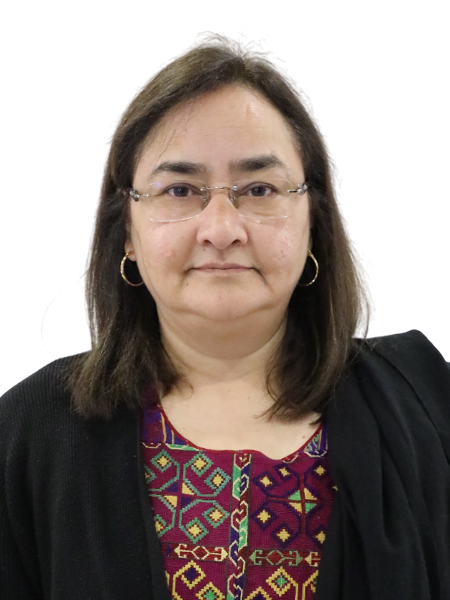
Ms. Shandana Khan, Director and CEO of RSPN
Ms. Shandana Khan leads the Rural Support Programmes Network (RSPN) as Chief Executive Officer, coordinating one of Pakistan’s most extensive rural development networks. Her expertise spans the full spectrum, from grassroots community mobilization to national policy advocacy, allowing her to connect marginalized communities with government institutions and private sector partners in meaningful ways.
She has shaped critical policy frameworks including poverty reduction strategies, local governance ordinances, gender mainstreaming policies, and social mobilization initiatives. Her strength lies in project design and social assessment, combined with the diplomatic skill needed to navigate relationships with donors, government bodies, and civil society. Leading a diverse team of over 100 professionals,
Ms. Khan operates effectively across Pakistan’s varied cultural and linguistic landscape. Fluent in English, Urdu, and Pushto, she holds Master’s degrees from the University of Cambridge and in International Public Policy from Johns Hopkins University.

Mr. Hidayat Ullah, Director
Mr. Hidayat Ullah specializes in translating development theory into practical infrastructure and community restoration. His work with UNDP as Programme Analyst, Project Management Specialist, and National Coordinator for the Early Recovery Cluster focused on rebuilding communities after crisis. As Chief Coordinating Officer for the Balochistan Groundwater & Trickle Irrigation Project funded by the Asian Development Bank, he led one of the region’s most significant agricultural infrastructure initiatives.
His government experience as Chief of Section at Balochistan’s Planning & Development Department complements his civil society work managing ActionAid Pakistan’s Community Development and Sponsorship Unit. This combination of public sector planning, multilateral coordination, and grassroots implementation gives him a comprehensive understanding of development challenges in Balochistan and beyond.
Proficient in English, Urdu, and Pushto, he holds an MS in Agricultural Economics from Oklahoma State University, USA, and an MS in Statistics from the University of Balochistan, Quetta.

Dr. Jamil Ahmed, Director
Dr. Jamil Ahmed shapes Pakistan’s technology education landscape as Vice Chancellor of Kohat University of Science and Technology (KUST) and Vice Chairman of the National Computing Education Accreditation Council (NCEAC). In the latter role, he influences curricula and quality standards for computing programs nationwide. His academic career spans 25 years across premier institutions including Ghulam Ishaq Khan (GIK) Institute, where he served as Dean of Computer Engineering, and Abasyn University, where as Vice Chancellor he established a new campus in Islamabad.
His research productivity is exceptional, over 120 published papers and book chapters—and he has successfully secured competitive research grants from the National ICT R&D Fund, HEC-British Council, and the UK Government. His international recognition includes the Charles Wallace Pakistan Trust Visiting Fellowship in the UK and the International Visiting Leadership Program Fellowship in the USA.
Dr. Ahmed holds a PhD in Artificial Intelligence from Kings’ College London, UK, and Master’s degrees in Information Technology from the University of Warwick, UK, and Computer Sciences from the University of Peshawar.
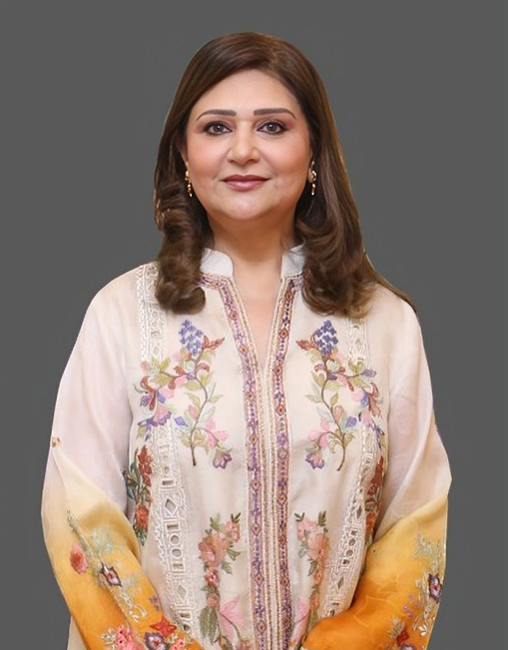
Ms. Fareena Mazhar, Director
Ms. Fareena Mazhar is a distinguished bureaucrat whose 36-year civil service career focused on economic reform and regulatory transformation. She spearheaded the initiatives that dramatically improved Pakistan’s Ease of Doing Business ranking, earning recognition from the World Bank as one of five global women leaders who delivered essential regulatory reforms benefiting entrepreneurs.
Her policy achievements include formulating Pakistan’s first post-decentralization Investment Policy and the National Policy on Culture and Tourism for Economic Growth. Serving in leadership positions across the Board of Investment, Ministry of Commerce, Pakistan Electronic Media Regulatory Authority, Prime Minister’s Office, and Federal Board of Revenue, she developed a comprehensive understanding of Pakistan’s economic machinery. On the international stage, she has represented Pakistan at the D-8 Investment Forum in Turkey and led trade delegations across Central Asia and Sri Lanka.
Ms. Mazhar holds an MBA in Marketing and Finance from COL, Canada, and diplomas in National Security from the National Defence University and HRM from the National University of Science and Technology.
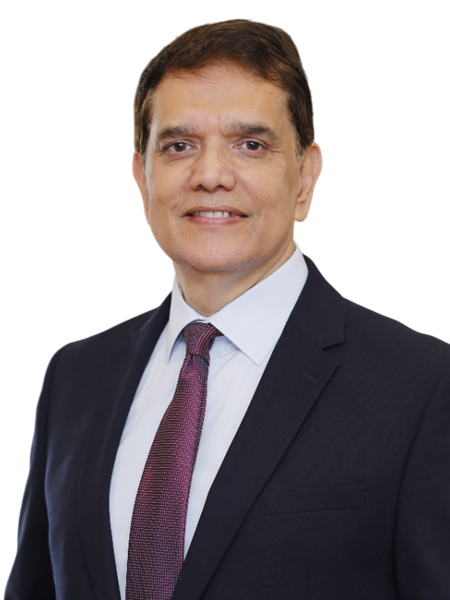
Dr. Roomi Saeed Hayat, CEO
Dr. Roomi S. Hayat is a seasoned development professional with over 30 years of experience across government, academia, and civil society, specializing in institutional strengthening, social entrepreneurship, and climate-responsive development. He has led and contributed to major international assignments with organizations such as the United Nations, International Labour Organization (ILO), United Nations Development Programme (UNDP), and the World Bank across Asia, Africa, and the Pacific.
He currently chairs the IUCN Pakistan National Committee, Human Resource Development Network (HRDN), the Certification Panel of the Pakistan Centre for Philanthropy (PCP), and the Climate Action Forum (CAF), and serves on the board of the Rural Support Programmes Network (RSPN).
He previously has also served as Executive Director of the National Rural Support Programme (NRSP) and held senior positions with the Government of Khyber Pakhtunkhwa.
Dr. Hayat is also Visiting Faculty at Quaid-i-Azam University and a Fellow of LEAD International. He holds a PhD in Anthropology, has completed executive education at Harvard Business School, and earned his Master’s degree from the New Jersey Institute of Technology.